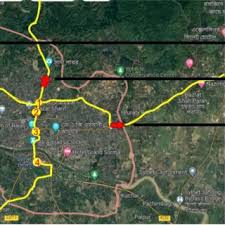
Planning a trip to Sylhet, or just curious about this vibrant region of Bangladesh? Getting your bearings can be tricky without the right tools. Many travelers find themselves lost or missing out on hidden gems simply because they lack a clear visual guide. A good sylhet map is your key to exploring this beautiful area efficiently and discovering its many attractions. This post will equip you with all you need to understand and use a sylhet map effectively, ensuring a smoother travel experience and a richer exploration.
Key Takeaways
- Understand the different types of maps available for Sylhet.
- Learn how to read and interpret essential map features like landmarks and transport routes.
- Discover practical tips for using a sylhet map to plan your itinerary.
- Explore how to find specific locations and points of interest within Sylhet.
- Gain insights into local transportation options shown on the map.
- Learn how to use digital and physical maps for best results.
Exploring the Geography of Sylhet
Sylhet is a region rich in natural beauty and cultural heritage. It is located in the northeastern part of Bangladesh. The landscape is characterized by rolling hills, tea gardens, and significant rivers like the Surma. Understanding this geography is key to appreciating what a sylhet map can show you. The area is also known for its unique Haor basins, which are large wetland ecosystems that transform dramatically between the monsoon and dry seasons.
A sylhet map helps visualize these diverse geographical features. You can see the distinct patterns of the tea estates that cover vast tracts of land, often appearing as neat, green carpets on topographical maps. The rivers and their tributaries are clearly marked, indicating crucial water routes and potential flood-prone areas. For travelers, this means understanding where the best scenic views might be, how to access remote villages, or which areas might be affected by seasonal water levels.
This geographical understanding is not just for tourists. Local authorities and researchers also rely on detailed maps to manage resources, plan infrastructure, and study environmental changes. The Sylhet region is a significant economic hub, particularly for its tea and natural gas industries, and maps play a role in planning the logistics for these sectors.
Key Geographical Features on a Sylhet Map
When you look at a detailed sylhet map, several geographical elements stand out. These are crucial for orienting yourself and planning your movements.
* Tea Gardens
Tea gardens are a defining feature of the Sylhet landscape. They appear as large, shaded areas, often with intricate patterns indicating the rows of tea bushes. These gardens are not just agricultural land; many offer opportunities for tourism, with visitor centers and scenic walks. A map will show you the locations of major tea estates like Sreemangal, known as the tea capital of Bangladesh.
The cultivation of tea in this region dates back to the British colonial era. The favorable climate and soil conditions make it ideal for growing high-quality tea. Seeing these areas on a map helps you visualize the scale of this industry and plan visits to specific gardens for tours and tastings.
* Rivers and Water Bodies
The Surma River is the most prominent river flowing through Sylhet. Other significant water bodies include the Kushiyara River and numerous Haors. The Haors are expansive, shallow, and marshy depressions that are flooded for much of the year. During the dry season, they become fertile agricultural land. Maps illustrate the network of these water systems, which are vital for local transportation, fishing, and agriculture.
Understanding the flow and extent of these water bodies is important, especially during the monsoon season when flooding can impact travel. Maps can indicate navigable waterways, which are often the primary means of transport to remote areas. The interplay between rivers and Haors creates a unique ecosystem that is a major draw for eco-tourism.
* Hills and Forests
While not as mountainous as some other parts of the world, Sylhet does feature low hills and forested areas. These are often found on the fringes of the plain and in areas bordering India. National parks and wildlife sanctuaries, such as Lawachara National Park, are located in these hilly and forested regions.
A sylhet map will depict these elevated areas and green spaces, highlighting them as potential destinations for nature lovers and hikers. These areas are home to diverse flora and fauna, offering a different experience from the tea gardens and riverine landscapes. Planning a visit to a national park requires understanding its location relative to your starting point and the accessibility of its trails.
Navigating with a Sylhet Map
A sylhet map is more than just a depiction of places; it’s a tool for effective navigation. Understanding how to read its various components will make your exploration much smoother.
Understanding Map Symbols and Legends
Every map has a legend or key that explains what the different symbols represent. This is your first port of call. You’ll find symbols for roads (divided into different types like highways, main roads, and local paths), railways, airports, bus stations, train stations, hospitals, police stations, hotels, restaurants, tourist attractions, and religious sites.
Pay close attention to the scale of the map. The scale tells you the ratio between a distance on the map and the corresponding distance on the ground. A map with a scale of 1:100,000 means that one unit of measurement on the map represents 100,000 of the same units on the ground. This helps you estimate travel times and distances. Understanding these basic elements allows you to interpret the information presented and plan your routes accurately.
Reading Road and Transport Networks
Roads are typically shown in different colors or thicknesses to indicate their importance. Major highways, often connecting cities, will be the most prominent. Smaller roads leading to villages or specific attractions will be less emphasized. Railways are usually depicted by a distinct line with crossbars.
When looking at a sylhet map, you can identify major transportation hubs like the Sylhet Osmani International Airport and the main bus and train terminals. This helps in planning your arrival and departure, as well as onward travel within the region. The map will also show you the network of local roads, which are crucial for reaching smaller towns and rural areas.
It’s also important to note that road conditions can vary significantly. While main highways are generally well-maintained, smaller roads might be unpaved or in poor condition, especially after rain. A good map will provide the framework, but local knowledge or recent travel information can supplement this for more precise planning.
Locating Landmarks and Points of Interest
Landmarks are visual cues that help you orient yourself. On a map, these could be prominent buildings, natural features like hills or rivers, or cultural sites like mosques and temples. The map will use specific symbols to denote these. For example, a star might indicate a major tourist attraction, while a simple dot could mark a smaller village.
For Sylhet, key points of interest include Shah Jalal’s Shrine, the historic Curzon Hall, and numerous tea gardens. Natural attractions like the Jaflong border area, Ratargul Swamp Forest, and various waterfalls are also marked. Knowing these locations on the map allows you to plot a logical route to visit them without backtracking.
Many modern maps also include points of interest like ATMs, pharmacies, and police stations, which are invaluable for practical travel needs. Having these marked on your map can save you time and stress when you need them.
Types of Sylhet Maps Available
The best map for your needs depends on your specific purpose. There are several types of Sylhet maps you can utilize.
Digital Maps and Apps
In today’s world, digital maps are incredibly popular and accessible. Applications like Google Maps, Maps.me, or OpenStreetMap offer interactive and detailed maps of Sylhet. These apps allow you to zoom in and out, search for specific locations, get directions, and even view satellite imagery.
One of the biggest advantages of digital maps is their real-time navigation capability. You can use your smartphone to get turn-by-turn directions, avoiding the need to constantly consult a physical map. Many of these apps also offer offline map downloads, which are essential in areas with limited internet connectivity. This ensures you can still navigate even when you’re not online.
Furthermore, digital maps are constantly updated, providing the most current information on roads, points of interest, and even traffic conditions. User reviews and photos can also offer insights into places you plan to visit. This makes them an indispensable tool for modern travelers.
Printed Maps and Atlases
Despite the rise of digital options, printed maps still have their place. A physical map or an atlas of Bangladesh that includes Sylhet can be a reliable backup. They don’t require batteries or an internet connection, making them ideal for situations where technology might fail.
Printed maps offer a broader overview of the region, allowing you to see the entire Sylhet division at a glance. This can be useful for long-term planning and understanding the geographical relationships between different areas. They are also less distracting than a smartphone screen, allowing for focused study of routes.
For areas where internet access is unreliable, a printed map is a lifesaver. You can mark your planned routes with a pen, make notes, and easily reference it without draining your phone’s battery. Many travelers find it useful to have both digital and printed maps for comprehensive coverage.
Planning Your Itinerary with a Sylhet Map
A sylhet map is an indispensable tool for crafting an efficient and enjoyable itinerary. It helps you visualize your journey and make informed decisions about where to go and how to get there.
Estimating Travel Times and Distances
Once you have identified the places you want to visit, the map helps you estimate how long it will take to get between them. By using the map’s scale, you can measure distances and then factor in typical travel speeds for different types of roads. For example, traveling on a major highway will be much faster than navigating narrow, rural paths.
It is crucial to remember that travel times in Sylhet can be affected by various factors, including traffic congestion, road conditions, and weather. Therefore, it is always wise to add a buffer to your estimated travel times. A sylhet map provides the spatial data, but local insights can help refine your time estimates.
For instance, a journey between Sylhet city and Sreemangal, which might look like a short distance on the map, could take several hours due to traffic and road conditions, especially if you are traveling during peak hours. Planning with buffer times ensures you don’t feel rushed and can enjoy your destinations.
Mapping Out Transportation Routes
Whether you plan to use buses, trains, CNG auto-rickshaws, or hire a private car, a map is essential for planning your routes. You can identify the locations of bus terminals, train stations, and major roads. This helps you decide the most convenient way to travel between your chosen destinations.
For example, if you are visiting Jaflong from Sylhet city, the map will show you the primary road route. You can then check the availability of direct bus services or the feasibility of hiring a car for the trip. Understanding the network of roads helps you avoid getting lost or taking unnecessarily long detours.
Consider the different modes of transport available and how they are represented on the map. Buses are common for inter-city travel, while CNG auto-rickshaws are prevalent for shorter distances within cities and towns. For remote areas, you might need to rely on local boats or jeeps, which may not always be clearly indicated on standard maps but can be researched using map information.
Discovering Off-the-Beaten-Path Locations
While popular attractions are easy to find, a detailed sylhet map can also reveal lesser-known places. By zooming in on rural areas, you might discover small villages, scenic viewpoints, or local markets that are not listed in typical guidebooks. These can lead to unique and authentic travel experiences.
For example, while exploring the map, you might notice a small cluster of houses near a river or a marked trail leading into a forested area. These could be opportunities for spontaneous exploration. Always exercise caution and consider local advice when venturing off the well-trodden path.
Mapping these potential discoveries in advance can help you integrate them into your itinerary, provided they are accessible. This proactive approach, using the map as your guide, can lead to some of the most memorable moments of your trip.
Using a Sylhet Map for Local Exploration
Once you are in Sylhet, the map becomes your constant companion for navigating within cities and exploring surrounding areas.
Getting Around Sylhet City
Sylhet city itself has a network of roads, markets, and landmarks. A map is crucial for finding your way around the city’s bazaars, locating specific shops, or reaching historical sites like the Sylhet Shahi Eidgah. You can identify major roads, which will likely be served by public transport like buses and cycle rickshaws.
For shorter distances within the city, the map helps you identify landmarks and orient yourself. It can show you the location of your hotel relative to attractions, restaurants, or transport hubs. If you’re taking a CNG auto-rickshaw, showing the driver the destination on your map can prevent misunderstandings.
Consider the layout of the city. Sylhet city is bisected by the Surma River, with important areas on both sides. Your map will clearly show the bridges connecting these parts, which are critical for movement.
Exploring the Surrounding Districts
Beyond Sylhet city, the region offers diverse attractions like the tea gardens of Sreemangal, the stone quarry of Jaflong, and the Ratargul Swamp Forest. A sylhet map is essential for planning trips to these districts. You can see the main routes connecting Sylhet to these areas and identify smaller roads that might lead to specific points of interest within them.
For instance, when planning a visit to Jaflong, the map will show you the road from Sylhet city and indicate the proximity to the Indian border. It can also highlight nearby villages or natural features that might be worth exploring. For Ratargul, the map might show river access points, indicating how you might reach the swamp by boat.
The scale of these maps is important. A map showing the entire Sylhet division will give you an overview, while a more detailed map of a specific district or area will be useful for local exploration.
Identifying Local Amenities
A good map will not only show you attractions but also essential amenities. This includes locations of hospitals, pharmacies, police stations, and banks or ATMs. Knowing where these are can be incredibly helpful in case of an emergency or for practical needs during your travels.
If you need to withdraw cash, find a place to eat, or seek medical assistance, your map can quickly guide you to the nearest facility. This proactive approach to locating amenities can save you time and reduce stress. Many digital maps also provide contact information for these places, which can be invaluable.
Practical Tips for Using Your Sylhet Map
To get the most out of your sylhet map, follow these practical tips.
Keep It Accessible and Protected
If you are using a physical map, keep it in a waterproof case or folder to protect it from rain or damage. Ensure it is easily accessible, perhaps in a side pocket of your backpack, so you can refer to it quickly without rummaging through your belongings.
For digital maps, ensure your phone is charged and that you have downloaded the relevant maps for offline use. Consider carrying a portable power bank. A durable phone case can also offer some protection.
Learn Key Phrases for Directions
While a map is visual, knowing some basic phrases in Bengali can be very helpful when asking for directions from locals. Phrases like “E kon dike?” (Which way is this?) or “Kothay jabo?” (Where should I go?) can be useful.
Even if you don’t speak much Bengali, pointing to your destination on the map and using simple English questions like “How to go?” or “Bus to ?” will often suffice. Locals are usually very helpful and willing to assist travelers.
Combine Digital and Physical Maps
The best approach is often to use a combination of digital and physical maps. Your smartphone app can provide real-time navigation and detailed information, while a printed map serves as a reliable backup and gives you a broader perspective.
This dual approach ensures you are prepared for any situation. If your phone battery dies or you lose signal, your printed map will still guide you. Conversely, if you need precise directions or want to explore points of interest, your digital map is unparalleled.
Cross-Reference Information
Do not rely on a single source of information. Cross-reference what your map shows with information from travel guides, local contacts, or online reviews. This helps you get a more accurate picture of routes, travel times, and the quality of attractions.
For example, a map might show a road, but local knowledge might tell you it’s impassable during certain times of the year. Similarly, online reviews can provide insights into the accessibility or current state of a tourist site.
Common Myths Debunked
Frequently Asked Questions
Question: Are there any free digital maps available for Sylhet
Answer: Yes, popular platforms like Google Maps and OpenStreetMap offer free digital maps of Sylhet that you can access on your smartphone or computer.
Question: Can I rely solely on my phone for navigation in Sylhet
Answer: While convenient, it’s advisable to have a backup, like a printed map or downloaded offline maps, as internet connectivity can be unreliable in some areas.
Question: How can I find specific tea gardens on a Sylhet map
Answer: Look for large green shaded areas often labeled with names like “tea estate” or specific garden names. Digital maps often have points of interest for popular tea gardens.
Question: Are road conditions on a Sylhet map always accurate
Answer: Maps show the intended road network, but actual road conditions can vary due to weather and maintenance. It’s good to get local advice for less-traveled routes.
Question: What is the best way to find accommodation using a Sylhet map
Answer: Look for icons representing hotels or guesthouses. Digital maps often allow you to search directly for accommodation and provide ratings and contact details.
Conclusion
A sylhet map is your essential companion for exploring this diverse region. It reveals geographical features, guides your routes, and helps you discover both popular sites and hidden gems. Whether you use digital apps or printed versions, understanding your map empowers you to travel confidently and make the most of your Sylhet adventure.